
music· 2022· Finished Airing
Monster Disco
mal
MusicSupernatural
Music video for the song Monster Disco by Shikao Suga and Hyadain. The song was featured as the fourth ending for Digimon Ghost Game.
Provider ★ 6.0·0 tracking
Canonical catalog
1579 titles
Music video for the song Monster Disco by Shikao Suga and Hyadain. The song was featured as the fourth ending for Digimon Ghost Game.

Music video for the song Sugar Loss by Wanuka.

The third season of Meichuxi De Yinyangshi Yijia.
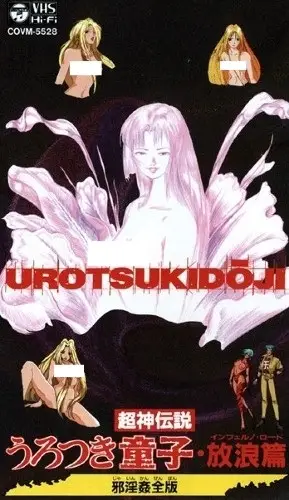
Movie-length compilation of the three-part OVA series featuring new footage. (Source: AniDB)
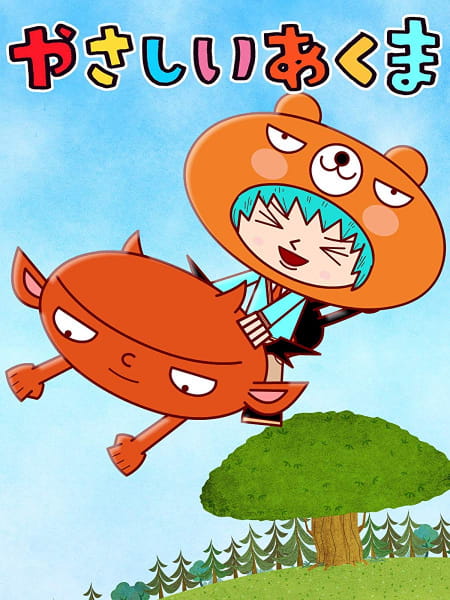
An Amazon Prime Japan Video exclusive. Foo, a kind boy, lives together with his grandmother. However, Foo has no friends. One day, as Foo is off picking herbs on a mountain to treat his grandmother's illness, he finds himself lost. But then he is saved by a boy demon with bright-red skin named Smoochy. The two kind yet friendless boys meet and become each other's first friend. The two begin to spend their days playing together, until one day Foo suddenly stops coming to the mountain. (Source: Official YouTube channel)

A music video for Cro-Magnon's song "Survivor" from their third album, featuring Mika Arisaka.

Tuxedo Gin commercial for Shounen Sunday magazine.
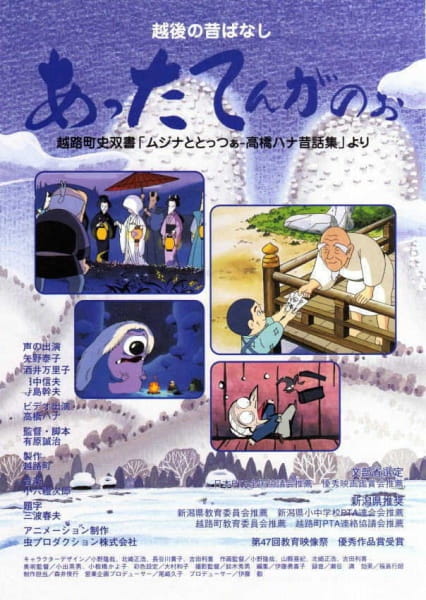
A collection of four folk tales from Koshiji (from 2005, part of Nagaoka), Niigata prefecture (Echigo is the old name of Niigata). Episode 1: The Azuki Mochi and the Frog A mean old woman tells an azuki mochi to turn into a frog, if her daughter-in-law wants to eat it. The daughter-in-law hears this, and... Episode 2: Satori A woodcutter warms himself at the fire of deadwood, when a spirit in the form of an eyeball appears in front of him. The spirit guesses each of the woodcutter's thoughts right... Episode 3: The Fox's Lantern An old man, who got lost in the night streets, finds a lantern with a beautiful pattern, which was lost by a fox spirit. The next day, he returns it reluctantly, and what he sees... Episode 4: The Three Paper Charms An apprentice priest, who lost his way, accidentally puts up at the hut of the mountain witch. To avoid being eaten, he uses three paper charms to get back to the temple... (Source: Official site)
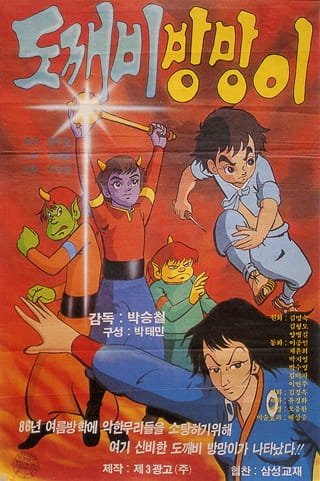
A 1986 Korean film about ancient demons and a brave boy.
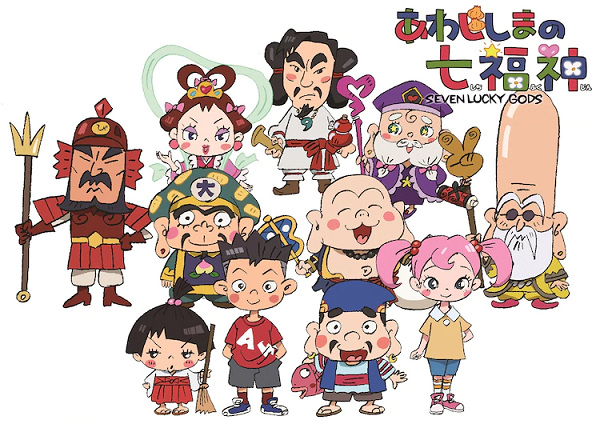
The story centers on the Seven Gods of Fortune in Japanese mythology as they reside on Awaji Island in Hyogo. In the shorts' story, the Seven Gods of Fortune slack in their duties in heaven, and Susanoo-no-Mikoto banishes them to Awaji Island. In order to return to the heavenly realm, they must help bring happiness to humans and rebuild their virtue. The outcast gods reluctantly grant human wishes and accumulate points in their "god phones" to be able to return to heaven. They aim to perform good deeds on particularly auspicious days to maximize point accumulation. Despite their best efforts at accumulating virtue, sometimes the Seven Gods of Fortune end up bringing misfortune to humans. When they fail, they lose points, further prolonging their stay on Awaji Island. (Source: ANN)
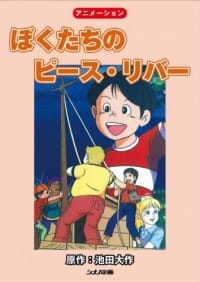
Anime adaptation of the children's fantasy novel by Daisaku Ikeda.

Music video for the song Suki Suki Diesuki Chou Ayeshiteru by Marine Houshou.

A mini side-story "Summer Mystery Adventure" series to the Taka no Tsume 8: Yoshida-kun no Batten File film. Though the film was released three years ago, it has a manga counterpart that's still running in CoroCoro Comic whose 2nd tankoubon volume was released recently. As well as scifi supernatural stories being very popular in Japan during the summer season.
A music video for Fullkawa Honpo's song "Toute wa Sono Kotae."

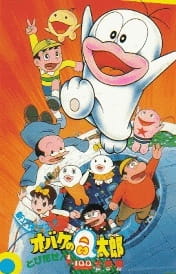
Note: Screened as a double feature with Doraemon: Nobita to Ryuu no Kishi and with Pro Golfer Saru: Kouga Hikyou! Kage no Ninpou Golfer Sanjou!. (Source: AniDB)


Music video for the song Hazard Symbol by Yuyu. The song was featured as the opening for Kaii to Otome to Kamikakushi.

A short film by Okamoto Tadanari.

A motivated man named Kota and shinigami #841 Yayoi's story. Kota is attracted to the work of the shinigami but can he actually become a one without suffering from his past?

One of the first examples of the tale is Hakuzan Kimura's Dreamy Urashima (Nonkinatousan Ryugu Mairi, 1925), in which a lazy man wakes up from his sleep and heads off to the seaside to spend the day fishing. There is a brief live-action shot of the sea swelling before the film returns to its animated fantasy world when a beautiful girl appears on the beach and lures him into the waves, transforming into the legendary turtle and carrying him beneath the surface to an undersea kingdom of fish and squid. Here he is welcomed by a bevy of kimono-wearing lovelies who lead him to a stately court full of musicians and dancers. As a ballerina pirouettes on the palace floor in front of him, he is plied with alcohol and handed a small gift box, before being escorted to a giant scallop shell that rises through the water taking him back to the surface. When he returns home, he finds he has aged so much that his wife and son no longer recognise him. He opens the gift box and a hideous demon springs from it and squashes him beneath its fists, at which point the man wakes up, and realising that the events of this story have all been a terrible nightmare, hurries out to work, alerted to the potential dangers of a life spent in idle daydreaming. (Source: midnighteye.com)

Unaired episode included in the DVD Volume 2.

A music video for the song Hoozuki by Kamiyama Yoh that serves as opening song for Momochi-san Chi no Ayakashi Ouji series.