Mizukami Satoshi no Manga Sadou
Mizukami-sensei tells the story of his life as a mangaka!! An autobiographical "column manga" in which Satoshi Mizukami recounts the beginning of his career as a mangaka. (Source: Batoto)
Canonical catalog
276 titles

Mizukami-sensei tells the story of his life as a mangaka!! An autobiographical "column manga" in which Satoshi Mizukami recounts the beginning of his career as a mangaka. (Source: Batoto)

Kentarou Ueno is a mangaka. He lives with his wife and their 10-year-old daughter in a small house that is also his studio. They are a happy family. Even though his wife suffers from depression, she is following the treatment, and all seems fine. One day, he found her on the floor, faced down and inert. Sayonara mo Iwazu ni is the story of what happened after that in Kentarou's life. (Source: Kana, translated)

An autobiographical manga detailing Kouji Maki's struggle in the manga industry during the 80s, the "Golden Age of Shounen Jump."

The hero and author of Sanzoku Diary is Okamoto Kentarou. When he was young, he lived out in the country, and he knew an old man who was a hunter. In 2009, Kentarou was inspired to leave Tokyo and return to Okayama Prefecture to become a hunter himself. Using an air rifle and traps, Kentarou hunts, prepares and eats various animals. The manga covers all his hunting-related activities in close detail. (Source: MangaHelpers)

As a gay couple living in Japan (where gay marriage is not yet legal), Yuuta and Kyouta have found a unique loophole in order to live together and support one another financially, legally and medically; Kyouta adopted Yuuta. This nonfiction manga depicts how they met, living together, discussions with their parents, and their future anxieties and determination as they strive for independence and equal rights under Japanese law. (Source: Tokyopop)

A full-color love letter to the always cute, sometimes exasperating, and honestly just plain weird behavior of cats. Favoring a cheap scratching pad over a luxurious cat tower, lending their "help" when it's time to fold laundry (by sitting on it), and zooming around the house at odd times for no reason... Cat lovers are sure to adore this comic about the everyday silliness of living with cats! (Source: Seven Seas Entertainment)

Tomoko Ninomiya is a professional mangaka and the director of the 'Institute of investigation of drunk people.' She and her fellows are addicted to alcohol and want to study to effects on themselves, but they always drink too much and do nothing related to the study.

The author is a graduate student at Waseda University who was born female but has always identified as a male. Among other activities, the author is a competitive fencer who has represented Japan on the national team at various international events. Describes the author's overseas experience as a student in Vancouver, BC, and in Hawaii. (Source: MU) Included one-shot: Kareshi Tekisei Level E

The autobiographical story follows Azuma when he is admitted into a hospital for alcoholism. The manga depicts the addicted patients, doctors, and the caring yet strict nurses that Azuma encountered in the ward. (Source: ANN)

4-koma manga about owning a pet rabbit.

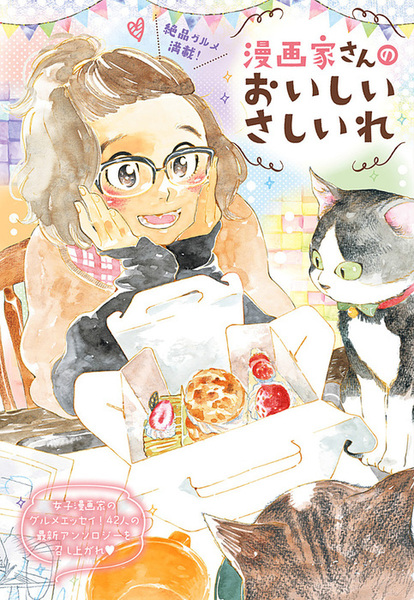
An anthology of stories about food by 42 talented female mangakas.

In the Darling wa Gaikokujin series: 1) Darling wa Gaikokujin 2) Darling wa Gaikokujin 2 3) Darling wa Gaikokujin with Baby (Source: Mangaupdates)

The autobiographical manga reveals the untold story of the creation of Nagai's Mazinger Z mecha manga. (Source: ANN)


Kuruneko was started in 2006 by author Kuruneko Yamato in an attempt to adopt stray cats. She updates her cartoons on her blog. Realistic and daily lives of the Kuruneko family is depicted by the author's view.

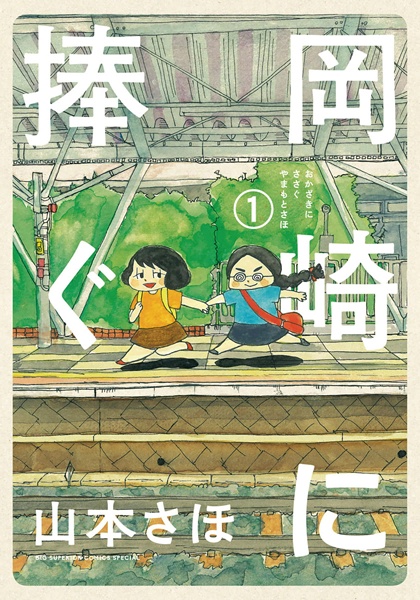
Kikuchi Naoe is a struggling manga artist in need of work. She lucks out when she runs into a travel writer and is asked to tag along. He turns out to be Yokomi Hirohiko, the Japan's biggest train enthusiast. In 1995, he visited all 4636 JR train stations. Now he is going to visit the remaining 5207 private stations. Kikuchi, despite her inital horror at her task, is stuck, as her boss is a huge train geek too. Thus, having few other options, she resigns herself to trying it out and henceforth accompanies Yokomi on his journey around Japan. (Source: ANN) This seinen manga is a semi-autobiography of the author.

A short autobiography by Makoto Kobayashi about his experience serializing 1 2 no Sanshirou in Weekly Shounen Magazine from 1978 to 1983. Included one-shot: Kakutou Sankyoudai


This is the tale of how Adachi Mitsuru went from being an assistant artist on a weekly manga to the superstar mangaka we know him to be today. But it's told (and written by) Mitsuru's older brother Tsutomu, who was also an assistant artist early on in their careers. (Source: MU)

After she and her lover split, Sachiko from Honey & Honey started seeing a transgendered friend Kai, who ultimately underwent surgery to fully transition to being a man. (Source: Okazu)

Boku, Otary-man (otaku + salaryman) is a autobiographical manga of the author Yoshitani, who is also working as a system engineer. Yoshitani is an ordinary Japanese salaryman who lives alone in a big city. He faces the daily struggle at his office and performs the domestic chores in his house all from an otaku perspective.

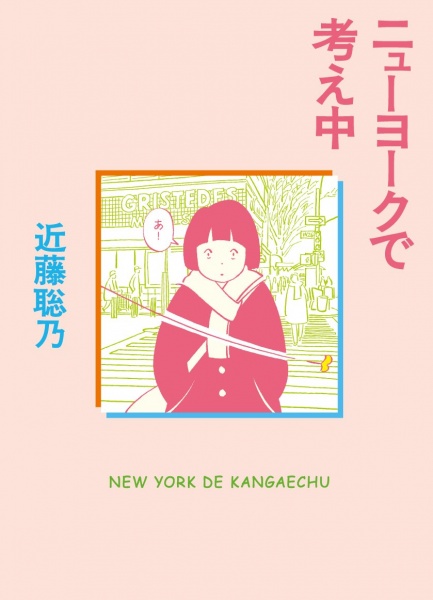
The author, Akino Kondoh, tells her thoughts on integrating the land of Thanksgiving. Beyond the difficulty of learning a foreign language, she recounts her daily anecdotes, between astonishment and questions. (Source: Archy World News)


When the gentler pace and stillness of the countryside replace the roar of the city, but your editor keeps calling. With gorgeously detailed yet minimal art, cartoonist Yeon-Sik Hong explores his move with his wife to a small house atop a rural mountain, replacing the high-rent hubbub of Seoul with the quiet murmur of the country. With their dog, cats, and chickens by their side, the simple life and isolation they so desperately craved proves to present new anxieties. Hong paints a beautiful portrait of the Korean countryside, changing seasons, and the universal relationships humans have with each other as well as nature, both of which are sometimes frustrating but always rewarding. (Source: Drawn and Quarterly)