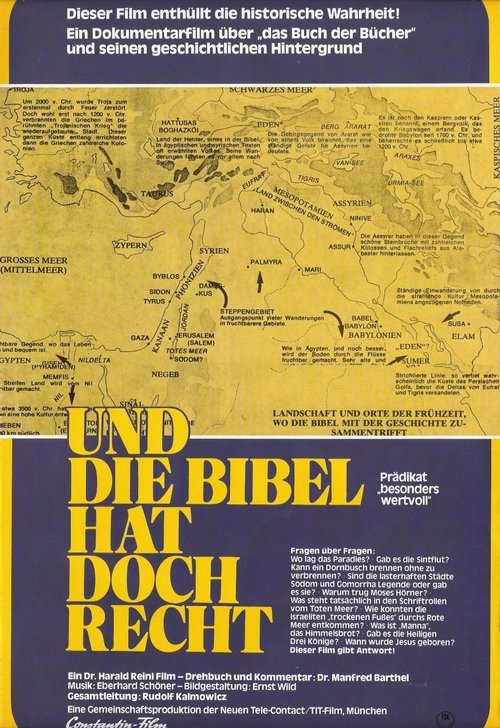
...und die Bibel hat doch recht
Film adaptation of Werner Keller's bestselling non-fiction book, which attempts to show in a "less spectacular way than the original" that archaeological finds and findings do not contradict biblical statements.
Canonical catalog
1000 titles

Film adaptation of Werner Keller's bestselling non-fiction book, which attempts to show in a "less spectacular way than the original" that archaeological finds and findings do not contradict biblical statements.


This is the story of the struggle of the pioneers of the March independence movement, which led 20 million Koreans to rebel on March 1, 1919.

A behind the scenes look at the second edition of a Formula 4 car competition bringing together 24 Internet personalities, GP Explorer.

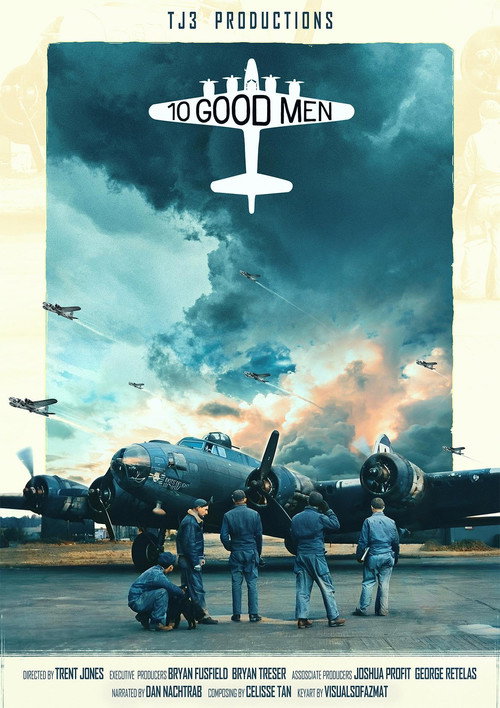
The B-17 Flying Fortress became an icon of American air power in World War II, but its legacy is written by the stories of the crews who flew it. Today, of the more than 100,000 veterans who flew on board of B-17 bombers during the war, there are only a handful remaining-but through years of searching, a few of the final survivors were brought together to tell this story one more time.

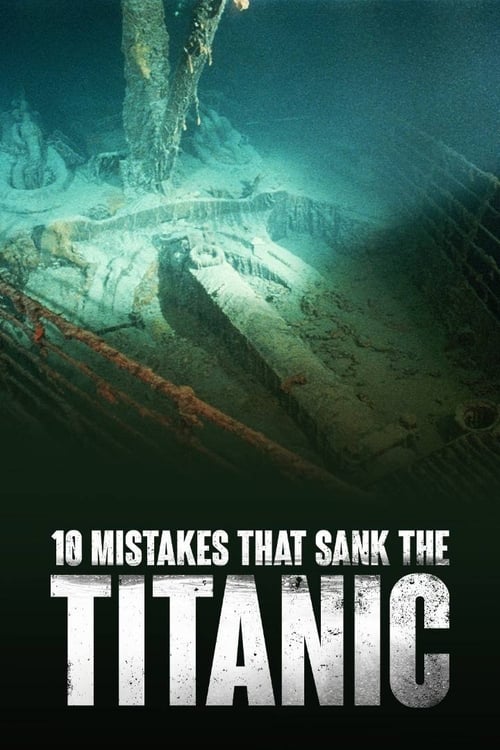
From the birth of the fatal iceberg to the hours after it struck the ship, this film follows the Titanic's journey from construction to catastrophe.

The story of British serial killer John Christie, who committed most or all of his crimes in the titular terraced house, and the miscarriage of justice involving Timothy Evans.

The history of the famous Brazilian bantam and featherweight world champion Eder Jofre, who tries to deal with his personal life and the obligations of a world class athlete, with the mentoring of his trainer and father Kid Jofre.

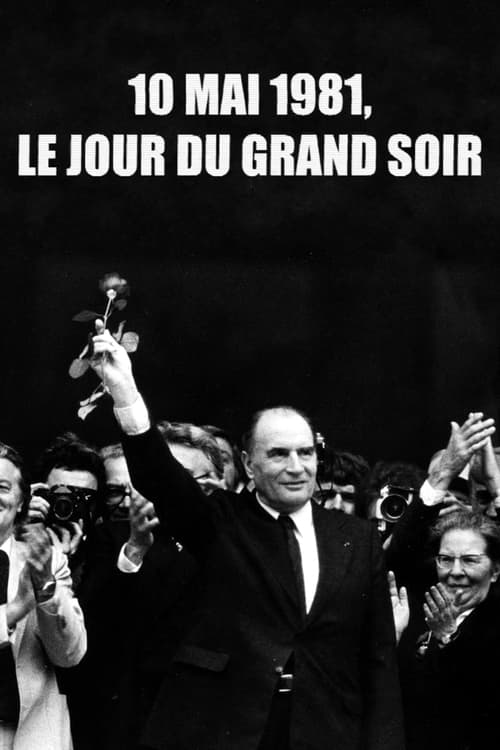
Fourty years ago, in May 1981, with François Mitterrand's election, some people were letting themselves dream about a better life while others were predicting the coming of soviet tanks upon the Champs-Élysées. If we gladly remember the turning point of austerity in 83, there were also the wage rises, the fifth week of paid leave, the abolition of death penalty, the decriminalisation of homosexuality, or the advent of independent radio stations. Rare archives and accounts by those who were at the heart of this story give an overview of it and shed light on lesser-known aspects.


In 1913 Congress created the Federal Reserve to bring financial stability to the nation after a number of banking panics, with a mix of regional banks and a central bank board. Congressmen Robert L. Owen and Carter Glass helped pass the Federal Reserve Act with the help of compromises led by President Woodrow Wilson. The Federal Reserve Bank of Kansas City was begun in 1914, led by Jo Zach Miller, Jr., along with local bankers such as William T. Kemper. With the bank rapidly growing, about 1920 a new 21 story building was built at 9th and Grand that at one time held the offices of the Bureau of Investigation and President Harry S. Truman.


A happy family in the suburbs of London enjoy an afternoon around the kitchen table when a knock is heard at the front door. A government official wants the family's help to assist a homeless family - but are they after more? The film puts on view the tragic fallouts of the Balfour Declaration (1917), in which the British Foreign Secretary Arthur Balfour signalled the go-ahead for the establishment of a Jewish State in Palestine.

As the Communist Party of China celebrates its 100th anniversary, this documentary looks back at the party’s history, from the 1920’s, to the Civil War, the Great Leap Forward, the Great Famine, the Cultural Revolution and the reforms by Mao Zedong and Deng Xiaoping. Did the Great Famine cost more than 15 million lives? How does the Cultural Revolution continue to shape Chinese politics today? What was capitalism like after Mao’s death? Through rare and never-before-seen historical footage, expert interviews and eyewitness accounts of the Great Famine, Tiananmen incident, and the Cultural Revolution, get to know how one party has so profoundly shaped China.
In 2015, we created this cell animation short to commemorate the Armenian Genocide Centenary. To the date, the Turkish government still denies the genocide took place, dodging their responsibility. 100 years will have passed this April 24th, and Armenians will keep on fighting for justice. This is a small tribute to the 1.500.000 victims.

Including extraordinary and unseen historical footage of WW1 and 2 and narrated by Sir Martin Lewis, 100 Years of the RAF is a definitive film that pays tribute to the determination and courage our men and women take on in the theatres of war; to defend our freedom and bring relief to people in need.
In 1415 a small English Army consisting mainly of Yeoman English and Welsh archers defeated and destroyed a much larger French army consisting mainly of the nobility of France at Agincourt. This film follows Henry Vth's campaign from his landing near Harfleur, his costly successful siege and his desperate attempts to cross the River Somme and escape to Calais culminating in the Battle of Agincourt on 25th Oct 1415. The BHTV team of military historians take you through the battle separating myth from fact to tell the true story of one of the most epic episodes of English history. The story is brought to life with re-enactment footage, maps and is shot on location in France.
On 11 July 1346 Edward III's Anglo/Welsh army landed at St Vaast in the Cotentin Peninsula. Over 12 months this army won 3 major battles Caen, Blanchtaque and Crecy and captured Calais, which would remain in English hands until 1558.This campaign was the first major chapter in the story of what was later called the 100 years War.This campaign is not only notable for the military victories of Edward and his army but for the way it reshaped warfare on the continent, the English had arrived as a major military player. The use of Chevauchee employed by Edward's army whilst not new was used in an intelligent manner to bring the French to battle. Once the French were brought to battle Edward's Army, consisting mainly of yeoman archers and infantry, was able to beat and destroy the French Army consisting mainly of nobles by a combination of leadership, tactics, discipline, courage and technology (The Long Bow).
Ten Years after the English victory in Crecy an Anglo/Gascon Army led by Edward of Woodstock, The Prince of Wales, won a great victory at Poitiers on 19 September 1356. Once again a French Army was decimated by the despised English but what made this victory different was not only the capture of the French King, John II, but the fact that was a victory won by all arms, not just the longbow.This campaign, conducted by Edward, was a masterpiece of strategic warfare. In 3 months the Anglo/Gascon had carried out a devastating campaign of economic warfare that undermined the French State and destroyed the wealth of a major area of France. The final gloss on the campaign was the victory and the capture of the French King. The story is brought to life by being filmed on location and reinforced with re-enactment footage and expert analysis.

The story of the first century of Japanese cinema from the point of view of the controversial Japanese filmmaker Nagisa Ōshima.

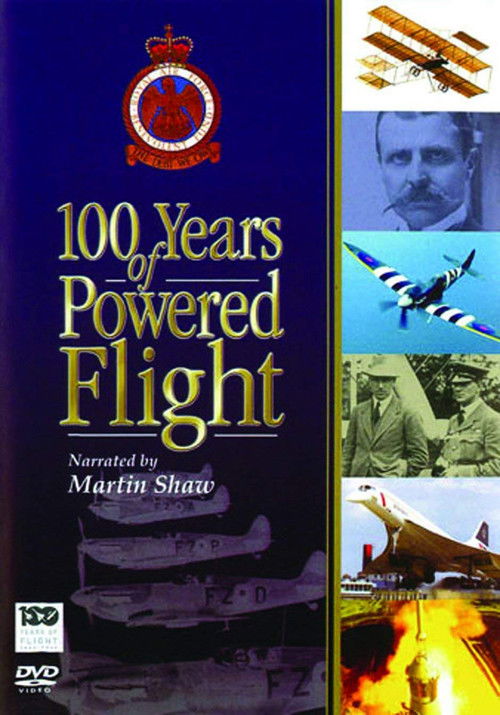
100 Years Of Powered Flight takes you on a riveting flight of discovery, from the windswept coastline of Kittyhawk to the reaches of outer space and from the first frail and hesitant propeller-driven machines to the very latest jet fighters.